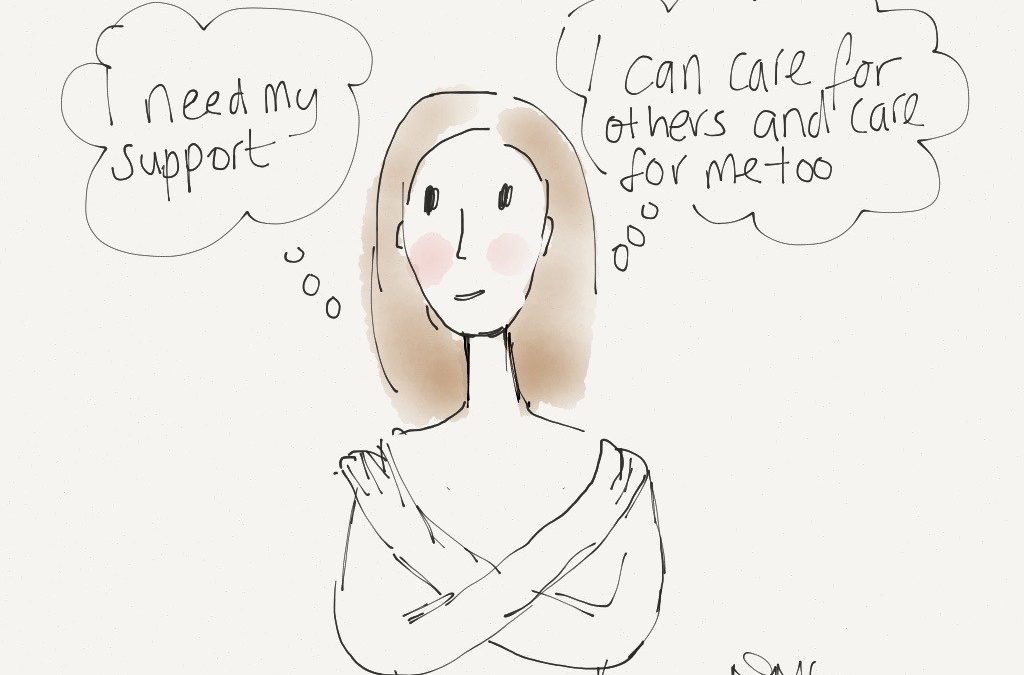

“Show kindness, for every person you encounter is facing a tough struggle.” ~Ian Maclaren
A friend recently recounted a tale about her mother that left a significant impression on me.
They regularly stroll around her mother’s apartment complex, combining exercise with their daily routine. Her mother is not a fan of casual conversation, typically focusing her gaze ahead while passing others. One specific woman consistently greets with, “How are you?” In previous instances, her mother would respond, but now she merely walks past.
My friend felt conflicted. She understood part of it but was also uneasy. She remarked, “At times, responding with ‘I’m fine’ doesn’t demand much. It’s simply courteous.”
Without much reflection, I replied, “It requires energy. And she’s exhausted.”
Then it dawned on me that I wasn’t truly discussing her mother. I was referring to myself. I was the one who felt drained.
Identifying Myself in the Narrative
As my friend elaborated, I realized how much I had imposed my experiences onto her narrative.
Sometimes, I avoid making eye contact with people while jogging—not out of unfriendliness, but to maintain my focus inward and uninterrupted.
At times, I can be abrupt with customer service—not because of their behavior, but due to my lack of energy for small talk. I prefer straightforwardness and to conclude matters swiftly.
And occasionally—something many women in mid-life hesitate to acknowledge—I’m no longer inclined to freely expend my energy. Energy is a resource, much like money, and we frequently function at a deficit. There’s little left to offer.
Energy Is Not Boundless—It Is Distributed
Energy is not infinite in any system—biological or otherwise.
In physics, energy is preserved, necessitating mindful distribution in living systems. The nervous system depends on limited resources, and continuous emotional labor and vigilance deplete this finite supply. Extended exhaustion prompts the body to conserve without needing permission.
Social interactions, emotional processing, and reactivity are frequently diminished—not as a moral decision, but a biological requirement. This conservation isn’t selfish; it’s about recognizing our limits.
Those who have experienced codependent caregiving learned early to anticipate and cater to others’ needs. We say “I’m fine” even when we aren’t, holding onto stability through pleasantness and attentiveness.
Years of overfunctioning mean that even minor interactions come at a cost. Making eye contact, adjusting tone, and being polite, while not inherently wrong, demand energy.
The body starts to make decisions before the mind comprehends. This is often mistaken for changes in personality, when in reality, it stems from exhaustion.
When Refusing Is Not a Boundary—It’s Triage
Here is a crucial distinction for habitual givers.
This is not about setting empowered boundaries. It’s triage. Saying no—emotionally or energetically—isn’t a choice, but rather a consequence that has caught up with the body.
If I don’t preserve my energy, my health declines. My children, my work, and those closest to me suffer.
Research on burnout shows that chronic emotional labor leads to emotional withdrawal as a protective measure—not from apathy, but from depleted systems (Maslach & Leiter, 2001).
If you’re here feeling guilty, know that conserving energy isn’t wrong. It’s your heart and intuition signaling that protection is needed, even if your mind hasn’t fully grasped it. Giving once represented safety and connection, so the reflex remains. However, you are making an effort to safeguard what little remains of yourself.
This is not coldness. It’s an acknowledgment of your nervous system’s limits.