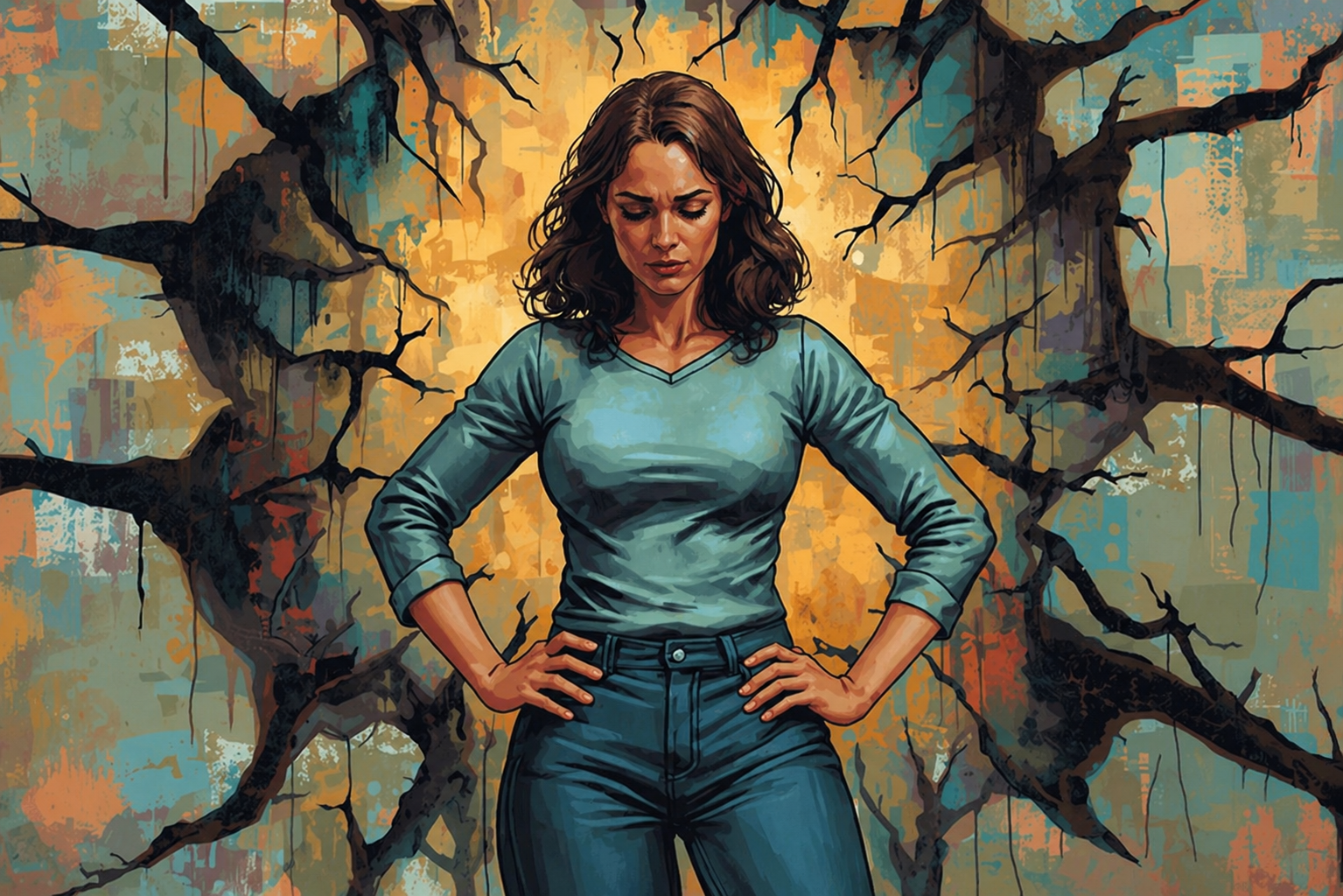
“The world shatters everyone, and in the aftermath, many find strength in their shattered places.” ~Ernest Hemingway
My grandmother had just passed away. My sister and I exited the room where she rested and stood in silence in the elevator as the doors shut. My sister then remarked, “Now you’re the last strong one in this family.”
Her words provided solace and pride, yet also unease. I felt the urge to halt the elevator and flee. She didn’t reveal anything new; she voiced what I already understood, and I longed to escape, unsure of how.
To comprehend why those words impacted me, rewind to a corridor when I was six or seven, outside my mother’s room. She had returned from the psychiatric facility months earlier. I envisioned life returning to the way it was, although I had forgotten what that entailed.
She came home and shut the door. Behind it, I could hear her typewriter as she wrote a book.
I knocked gently, having learned to be courteous about my needs. The response was swift: “No. Don’t interrupt me.” Her tone carried a sentiment I recognized from when she claimed I was “too much” for her.
So I departed, not with anger, but with the sense that I understood. I believed the closed door was logical. I should tend to myself and refrain from asking again. That choice in a corridor at six or seven formed the template for the following four decades.
My mother’s absence, even in her presence, had begun earlier.
Before her psychiatric hospitalization, I primarily remember waiting for her availability. I recall her telling me to cease crying because it overwhelmed her, accusing me of theft when she misplaced something, and telling my father I was too strong-willed.
These were indicators of a woman on the brink of a breakdown, though I didn’t grasp it at the time.
When I was about five, she was admitted for severe psychosis. I don’t have much recollection. My sister had been born months prior. My grandmother unexpectedly took me from school. My grandparents took us in, and I found myself in a new city and school with no friends. I must have concluded I was, in a fundamental sense, alone.
Upon her return, I hoped for transformation. The closed door indicated otherwise. I became resourceful, looked after my sister, observed my father, gauged the home’s atmosphere, ensuring no one worried about me because I was already concerned about everything.
Later, when my parents divorced, and my mother relocated, I cared for her too. Every two weeks, I made the trip to her place with my sister, uncertain of what awaited, always on the lookout for signs of a manic episode and treading lightly.
At fourteen, I opted to cease visiting but kept in touch via phone for years. I was always more her caregiver than her offspring.
Being strong didn’t seem like a duty. I regarded it as my essence, a necessary role, but it provided security. As long as I maintained order, I had a purpose and a reason to be needed, which felt akin to being loved.
What I failed to recognize and took years to understand was that I had also constructed a prison. Deep down, I feared everything would fall apart if I ceased being strong. Not just for those around me, but for myself as well, as I decided at six that no one would catch me.
I persevered. A desire to be useful and exceptional propelled me through life. I worked as a professional actor for twenty years, earned a PhD at forty-five, began a new academic career, married, and had children. A life that appeared cohesive from the outside, which in many ways it was. Yet, I accepted every call, showed up when requested, and affirmed without assessing my limits.
The body