“Trauma isn’t defined by what happens externally, but rather by what transpires within you due to external events.” ~Dr. Gabor Maté
Numerous individuals think trauma originates from distressing experiences.
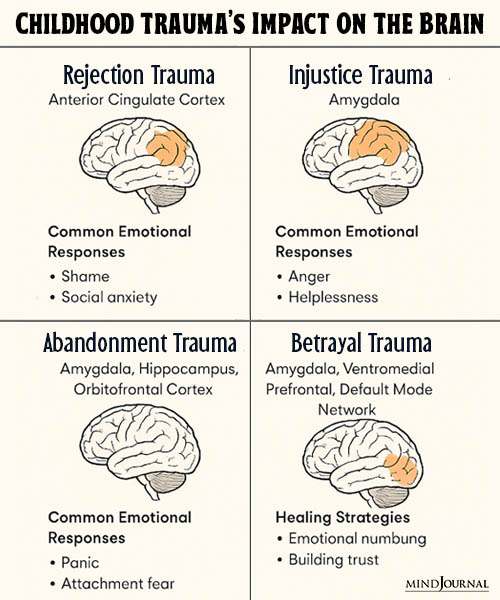
Nonetheless, not every trauma is rooted in fear. Some injuries come from betrayal—when our ethical integrity is compromised, leaving us to bear the weight alone.
This occurs not solely because of adverse events, but when an individual, figure of authority, or system we relied on for our safety crosses a moral line. The outcome is not only pain but also a persistent psychological and relational aftermath.
As a young one, I lacked the vocabulary to articulate this.
When Honesty Failed to Shield Me
I found myself in class, gazing at incomplete worksheets. My body was present, yet my thoughts were elsewhere.
My teacher came over, questioning if I was okay.
She had never inquired all year, despite my arriving at school exhausted and unkempt. But that particular day, she persisted, ensuring me I would not be punished for honesty.
Her assurance was difficult to trust, as she possessed a paddle for disciplining students. I dreaded that my moment would arrive.
Nevertheless, she was an adult, seemingly the only one I could confide in.
She appeared to have knowledge and authority—or so it seemed from my viewpoint. I thought she could halt the troubling situation.
Thus, I opened up to her.
I disclosed the abuse, my anxiety about returning home, regarding my stepmother and stepsister.
She vowed to intervene.
But nothing changed.
Child Protective Services came that week. They knocked, received no reply, and departed.
And I faced repercussions for my honesty.
She became the final adult I trusted after that.
The Profound Harm Beyond Anxiety
The true injury wasn’t merely the domestic situation but rather what transpired afterward.
Moral injury occurs when an individual observes, cannot avert, or is betrayed by actions that violate deeply held ethical principles. It can stem from actions or a lack of action, especially when those in power fail to uphold trust.
A line had been crossed.
I conveyed truth. An adult vowed safety. Systems created for intervention neglected to intervene. The violation was not solely the abuse—it was the resulting neglect.
In lieu of panic, I experienced something more subdued: shame rather than fear, guilt instead of anger. I believed that expressing my feelings would be dangerous.
How My Past Shadowed My Adulthood
As I grew older, I pursued roles in support professions. I became a teacher, then transitioned to a school counselor.
This was not coincidental.
I needed to trust that clearly identifying harm would result in goodness and safety.
Therefore, I became an advocate.
I reported abuse, stood up for affected children, documented incidences, escalated issues, and adhered to procedures. I fought fiercely while others withdrew from the complexity, effort, politics, or consequences.
For a time, I believed dedication could restore the system.
However, eventually, reality proved otherwise.
Despite my diligent efforts, the system continued to falter. Children remained in danger. Accountability was diffuse. Truth was acknowledged and subsequently neutralized.
Letting go of the belief that goodness would inherently triumph proved unexpectedly arduous.