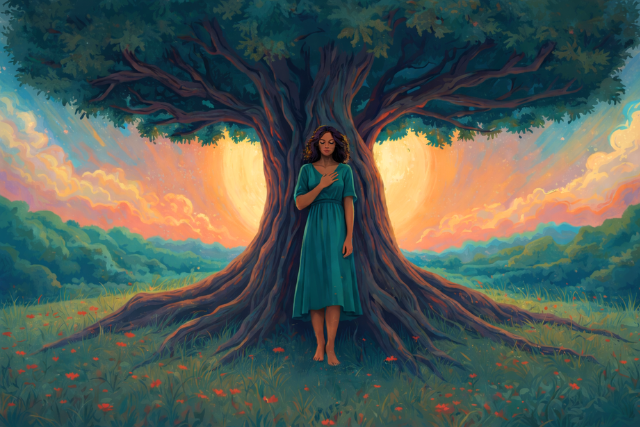
“From suffering have risen the most resilient spirits; the most prominent individuals carry the marks of their trials.” ~Khalil Gibran
I was born with spina bifida. At the age of ten, medical professionals informed me that I might never walk again following a significant surgery.
I can’t recall every detail, but I remember the atmosphere, the tension in the air, the cautious language of adults, and the subsequent silence.
Paralysis loomed as a possibility.
By that point, I had become accustomed to hospital ceilings. I had faced numerous surgeries before truly grasping the meaning of surgery. Ultimately, I would endure thirteen.
Born with VACTERL syndrome, I had one kidney removed, undergone bladder correction, experienced open-heart surgery, and faced multiple bowel surgeries, including receiving and later fixing a colostomy bag.
At the age of ten, all I understood was that my body felt precarious.
Four days later, I found myself standing in a hospital room. Alone, solely aware of pain, I pressed the pain button, sat up, swung my legs over the bed, and pushed myself off.
Not because I felt powerful or unafraid, but because something within me rejected that forecast.
My legs shook, my balance faltered, yet I stood. Without sensation, I found myself on the ground. This occurred for three consecutive days.
On the third day, a nurse discovered me standing and declared, “I’m calling physical therapy. You will walk again.” As she assisted me, I gazed at a wheelchair that no longer seemed so intimidating.
That marked the beginning of my journey with resilience.
Basketball transformed into more than a game; it became my dialogue with my body. Each bounce was validation, each sprint was rebellion. The court rewarded effort, not medical records.
Through consistency and focus, I forged strength where fear had resided. I played in high school and subsequently in college, not due to an unmarred body but because it adjusted.
Life challenged me once more.
As a young adult, following twelve surgeries, scar tissue resulted in further complications. Losing six pints of blood led to a coma.
Upon awakening, walking was no longer instinctual. Muscles that once reacted seemed far away. I had to rediscover balance and reconstruct strength.
Again.
Relearning movement twice in a lifetime is a humbling experience.
It removes pride and instills patience.
I faced moments of irritation, rage, and wishes for a smoother journey. I compared myself to those whose medical journeys did not linger around them.
However, a shift occurred during my recovery.
I surrendered, weary of hospitals.