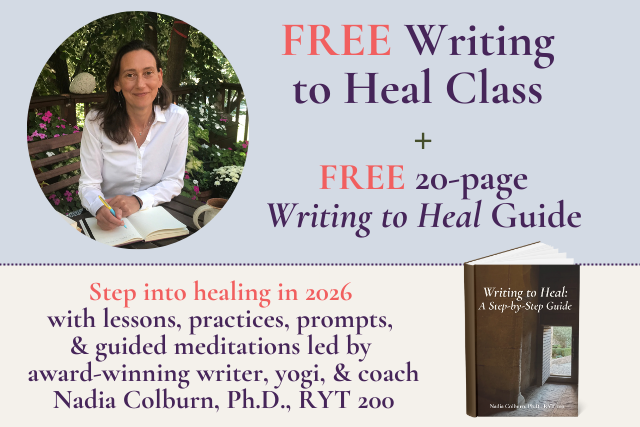
Complimentary Live 90-minute Write to Heal session and a 20-page guide featuring prompts, recordings, and additional resources to aid your healing process.
Throughout my college years, I particularly enjoyed personal essay composition. Having journaled for nearly ten years, I was aware of how impactful it can be to delve into life events through writing.
At first, journaling didn’t yield much benefit for me. In my youth, I tended to use it for overthinking, self-criticism, or to reinforce unhelpful patterns. However, as I confronted childhood trauma through therapy and various methods, my writing began to improve.
Instead of concentrating on negativity or obsessively dissecting myself, I began to question my perceptions, reflect on what I learned, recognize patterns, and monitor my growth. This gradual shift transformed my self-perception, enabling me to rewrite my life narrative.
This is why I’m a proponent of writing programs that extend beyond mere journaling. Although writing is potent, often guidance and structure are crucial for impactful change.
If you are looking for a guided writing experience, I suggest this no-cost opportunity from Tiny Buddha contributor Nadia Colburn. Her complimentary 90-minute Write to Heal session emphasizes guided, body-aware writing techniques that assist individuals in relating to their experiences in new ways.
The session encourages you to slow down, maintain your grounding, and connect with your inner landscape in a nurturing manner.
In her forthcoming session, she will address:
- Evidence-based advantages of writing for healing
- Which types of writing promote healing and those that don’t
- Frequent pitfalls in the healing journey and strategies to bypass them
- Practicing embodied writing
- Insights from her own healing experiences and writing collaborations with clients over the last decade
Participants will acquire:
- Strategies to unify mind and body
- A fresh perspective on understanding your narrative
- Techniques to avoid being re-triggered during writing and healing
- Ways to uplift and nurture yourself
- A more profound and supportive relationship with your story
- Enhanced energy levels
- Resources to boost your immune function, mood, sleep, and more
In this engaging session, you will have the chance to pose questions and obtain a 20-page guide filled with lessons, prompts, exercises, and recordings for individual exploration.
There are two available dates:
Thursday, January 15th at 3 pm ET/12 pm PT/8 pm UK
Friday, January 16th at 12 pm ET/9 am PT/5 pm UK
If you’re unable to join live, register for free to receive the guide and the recorded session.
About Nadia: PhD; RYT 200.
Nadia is the writer of two award-winning poetry collections and has shared essays and memoirs in over 80 platforms, including The New Yorker, Slate, Lion’s Roar, and The Harvard Review. She obtained a PhD in English, taught at MIT, and transitioned from academia to establish the Nadia Colburn Online Writing School, where she imparts writing guidance through a holistic, trauma-aware lens.
Her approach is shaped by her teaching history and personal healing journey. In addressing chronic illness and childhood trauma, Nadia investigated multiple avenues such as talk therapy, EMDR, somatic therapy, meditation, and diverse healing practices.
At first, writing didn’t catalyze transformation for her. Similar to many, journaling provided solace but didn’t bring about change. Real transformation emerged when she integrated writing with embodied practices and alternative healing strategies.
Over the years, she has assisted thousands of students in embracing their creative expression and using writing for self-awareness and integration—not merely as a quick remedy,